
Mullins Lab
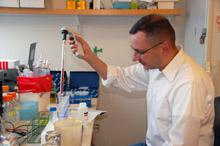
The Mullins laboratory is located in Building F on the South Lake Union campus of the University of Washington School of Medicine. The wet lab portion of the Mullins laboratory is now closed. We still have a small group of investigators performing computational studies to provide insights into the relationship between HIV and its human hosts in an effort to assist the global fight against HIV and AIDS. We also continue to develop tools for computational studies and maintain our collaborations focused on HIV prevention efforts and reservoirs of HIV maintenance under antiretroviral therapy.
Lab News
Phylobook Software Published in Biotechniques
“Phylobook Software Published in Biotechniques.” Phylobook is a web application supporting the display, annotation and sharing of phylogenetic trees. More importantly, it provides for semi-automated lineage assignments and manual editing of the lineage assignments aided by match and mismatch plots. The software is available at GitHub.
| News, 5 May 2024
Recent Publications
Jeffrey C Furlong, Peter D Darley, Wenjie Deng, James I Mullins, Roger E Bumgarner (2024). Phylobook: a tool for display, clade annotation and extraction of sequences from molecular phylogenies. Biotechniques 2024 May 3. (pubmed) (doi)
Joy, J., Gervassi, A.L., Chen, L., Kirshenbaum, B., Styrchak, S., Ko, D., Mclaughlin, S., Shao, D., Kosmider, E., Edlefsen, P.T., Maenza, J., Collier, A.C., Mullins, J.I., Horton, H., and Frenkel, L.M.(2024).Antigen specificities and proviral integration sites differ in HIV-infected cells by timing of antiretroviral treatment initiation J. Clin. Invest. 2024 Jun 4:e159569(pubmed) (doi)
Ko, D., McLaughlin, S., Deng, W., Mullins, J.I., Dragavon, J., Harb, S., Coombs, R.W., Frenkel, L.M.(2024).Development and validation of a genotypic assay to quantify CXCR4- and CCR5-tropic human immunodeficiency virus type-1 (HIV-1) populations and a comparison to Trofile™ Viruses 2024 16, 510(pubmed) (doi)
Dylan H Westfall, Wenjie Deng, Alec Pankow, Hugh Murrell, Lennie Chen, Hong Zhao, Carolyn Williamson, Morgane Rolland, Ben Murrell, James I Mullins(2024).Optimized SMRT-UMI protocol produces highly accurate sequence datasets from diverse populations-Application to HIV-1 quasispecies Virus Evol. 2024 Mar 2;10(1)(pubmed) (doi)
Aniqa Shahid, Signe MacLennan, Bradley R Jones, Hanwei Sudderuddin, Zhong Dang, Kyle Cobarrubias, Maggie C Duncan, Natalie N Kinloch, Michael J Dapp, Nancie M Archin, Margaret A Fischl, Igho Ofotokun, Adaora Adimora, Stephen Gange, Bradley Aouizerat, Mark H Kuniholm, Seble Kassaye, James I Mullins, Harris Goldstein, Jeffrey B Joy, Kathryn Anastos, Zabrina L Brumme; MACS/WIHS combined cohort study (MWCSS) (2024).The replication-competent HIV reservoir is a genetically restricted, younger subset of the overall pool of HIV proviruses persisting during therapy, which is highly genetically stable over time. J. Virol. 2024 Feb 20;98(2):e0165523.(pubmed) (doi)